Interchangeable-lens cycling sunglasses cannot be treated as separate standalone components. To cyclists, modular eyewear is a high-speed dynamic system where frame flexural retention, aerodynamic micro-ventilation, and decentered optical clarity must perform harmoniously under extreme vibrations and changing light.
We have been making sports eyewear for fifteen years. Our interchangeable-lens line—which we call the “More In One” series—features a single main frame that can be paired with various lenses, मंदिरों, और सिर की पट्टियाँ, allowing you to transition seamlessly between activities like cycling, दौड़ना, स्कीइंग, और मछली पकड़ना. Below, we share some real-world experiences with this product line, along with key questions you should ask before making a purchase.
一、What is the true value of interchangeable lenses?
When a brand opens this conversation, my first question is usually: are you after a swap feature for your customers, or are you trying to fix a problem in your own warehouse?
The first is a selling point. The second is arithmetic. The practical benefit of a modular line is SKU compression. Instead of carrying separate cycling, दौड़ना, and ski inventory, you share one main frame and put the variation into lenses, मंदिरों, and straps. For online stores and retail chains that matters more than “one pair replaces three” — carrying a few less full-SKU lines frees up real cash.
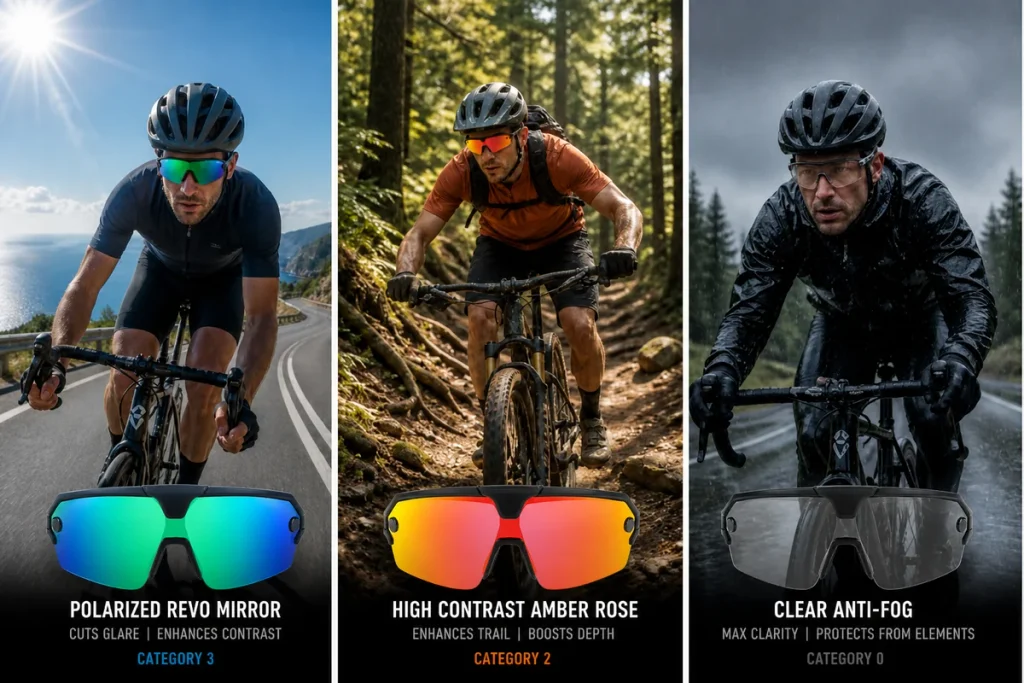
Cycling genuinely needs lens changes, बहुत. On a three or four hour ride you go from morning haze to midday glare off asphalt to dappled light under tree cover, and one tint can’t cover all of it. But that’s where the demand comes from, not what separates a good product from a bad one. That comes down to the points below.
二.What are the common mechanisms for changing slides (or films)?
The swap mechanism determines both the user experience and the long-term structural durability of the eyewear. Sourcing teams typically encounter three core mechanical architectures, each presenting distinct manufacturing tolerances, mold tooling investments, and failure modes.
2.1 Comparison of Core Lens Swap Architectures
| Mechanism Type | Swap Speed | Retention Force | Tooling Complexity | सहनशीलता & Failure Risk |
| Pressure-Fit / Brow Flex Notch | 5–10 Seconds | 15–22 N (उच्च) | Moderate (High elasticity TR90 required) | Low wear; depends entirely on polymer memory and brow notch radius |
| Mechanical Rail / Slide Track | 3–6 Seconds | 22–30 N (Ultra-High) | उच्च (EDM mold tolerance <0.05 मिमी) | Excellent road vibration resistance; track groove can collect trail grit if unsealed |
| Magnetic Mount + Mechanical Latch | <2 Seconds | 12–18 N (Dual Lock) | Very High (Precision magnet insert + स्नैप) | Instant swap; requires secondary mechanical lock to prevent drop during crashes |
ENGINEERING RETENTION RULE: Never rely solely on magnetic mounts for aggressive road or gravel cycling. Road vibrations generate g-forces that can dislodge purely magnetic lenses. A high-tier OEM factory integrates a physical mechanical snap-lock alongside magnetic alignment pins.
2.2 The 500-Cycle Flexural Fatigue Standard
In real-world usage, an enthusiastic cyclist swaps lenses 2 को 4 times per week across seasons. Inferior TR90 nylon grades or poor gate placements during injection molding suffer from micro-crazing at the temple hinge and brow bridge notches, causing the frame to loosen and rattle.
Our quality engineering team subjects interchangeable frames to a rigorous 500-Cycle Mechanical Lens Insertion & Removal Fatigue Test. A pneumatic actuator cycles lens insertion at calibrated angles while continuous strain gauges verify that retention force decay remains strictly under 8% after 500 complete swaps.
三、How to Match Lenses to Specific Scenarios
We provide the following useful forms.
| Lens type | वीएलटी | Where it’s used |
| REVO mirror coating | 8%–18% | Bright road, water glare |
| HD high-contrast | 12%–50% | Trails, gravel, dappled tree cover |
| ध्रुवीकरण (टीएसी) | Grey ≥99% polarizing efficiency | Daytime road — kills asphalt and standing-water glare |
| Night-vision yellow | 75%-90% | घटाटोप, कोहरा, night riding |
| photochromic | Darkens ~30 s, fully clear by 180 s | Frequent light changes, dawn-to-dusk rides |
A few things to watch:
More polarization isn’t automatically better. Grey polarized runs above 99% efficiency, but light tints — yellow, गुलाबी, purple — are low-polarization at 70–85%, roughly CAT.1. Some suppliers price a light low-pol lens like a grey one. It’s checkable: ask for the polarization efficiency data.
Ask for photochromic transition times. Ours darkens in about 30 seconds, recovers to roughly 85% पर 120 seconds, and clears fully by 180. Coming out of a tunnel mid-ride, that difference is obvious. If a factory can’t state both numbers, they haven’t measured them.
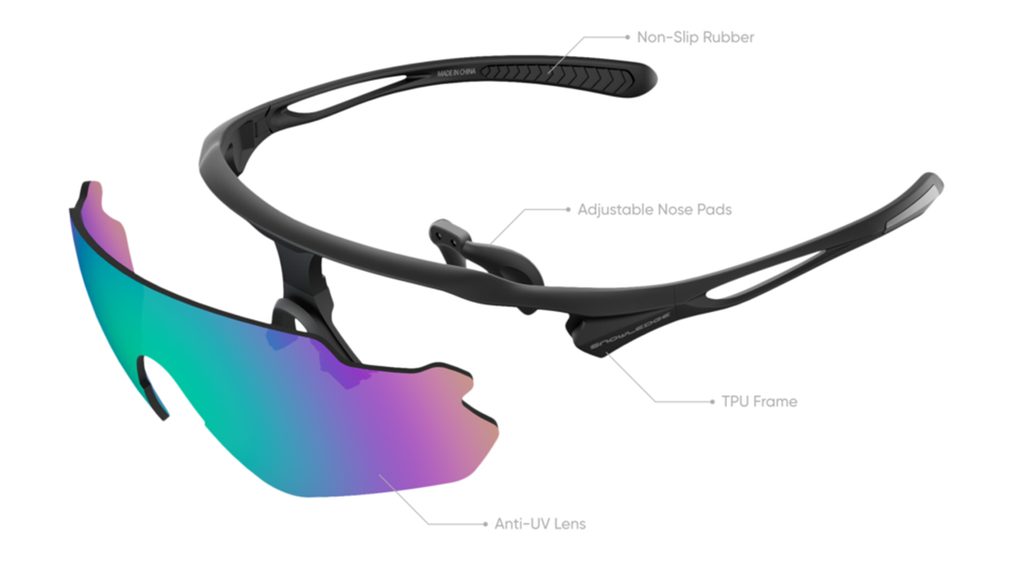
Lens thickness runs 1.0–2.0 mm by model and function. Base material is PC, टीएसी, or nylon. UV400 across the range. Anti-fog tested to EN ISO 18527-1:2022, with IMD in-mold anti-fog available on cylindrical models.
四、Three Key Factors for Fit Stability
A swap mechanism that works beautifully is wasted if the glasses don’t stay put. Stability on a cycling frame comes down to three things, all of which you can judge from samples:
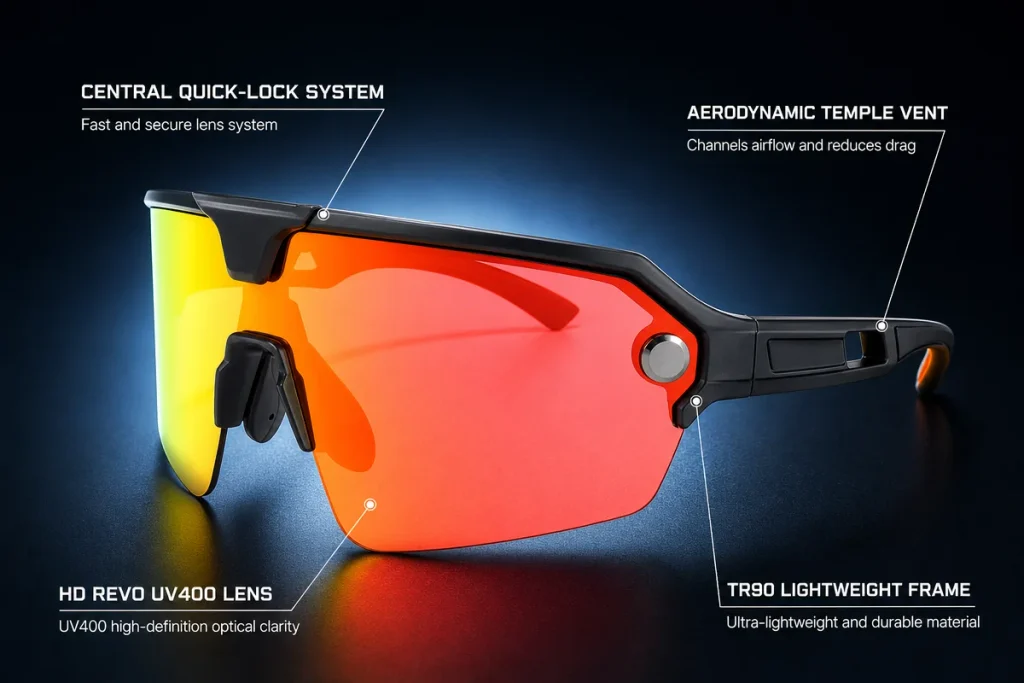
Frame and temples. TR90 complete glasses at 35–40 g, lightweight versions down to 30 जी; our classic cylindrical series has hit 26 जी. Temples are rubber-wrapped with elastic memory, nose and temple pads in TPE. Whether they slip once you’re sweating is something a single test ride answers.
Hinges and screws. Cupronickel spring hinges with 304 stainless screws. These are the two parts most easily swapped for plain steel — invisible by eye, obvious under salt spray. On an interchangeable product the frame gets flexed constantly, so material here matters more than on a fixed-lens frame. Ask about hinge and screw material specifically rather than asking generally about build quality.
Anti-fog. Climbing and waiting at lights is when fogging hits, because the airflow stops and you’re relying entirely on coating and structure. We test to EN ISO 18527-1:2022, with IMD in-mold anti-fog on cylindrical models. The ski line pairs upper and lower vents with anti-fog coating.
五、Key Items That Must Be Checked During Sampling and Mass Production
Before committing capital to custom tooling and bulk production, brand procurement directors should audit prospective manufacturers against this 6-point engineering checklist:
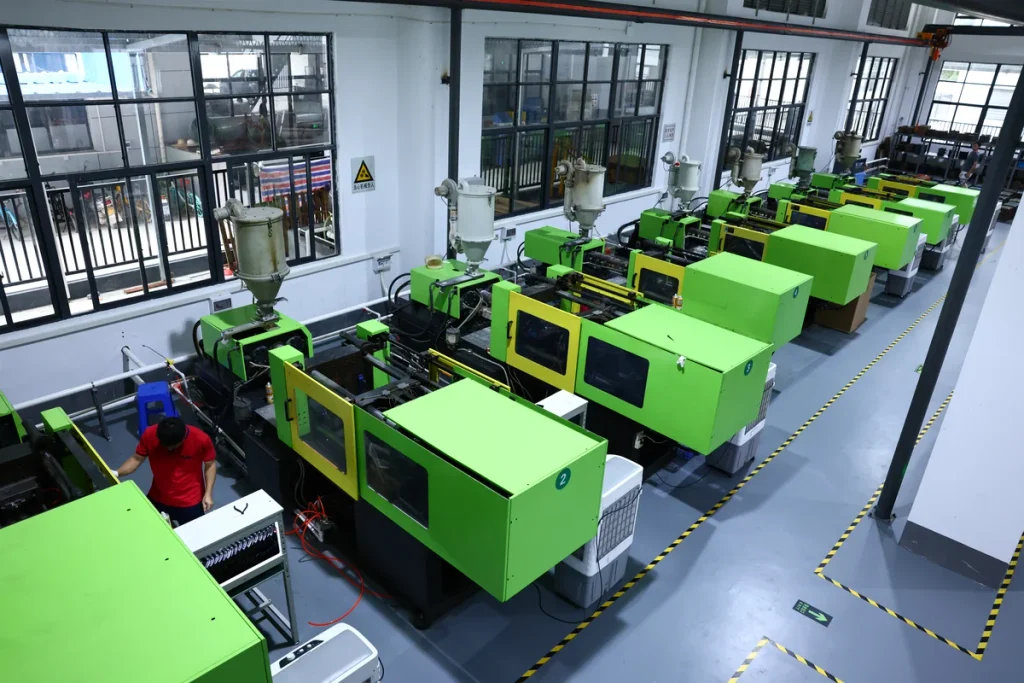
1. Tooling & EDM CNC Precision: Confirm the supplier uses CNC EDM mold machining with tolerances within <0.02 mm for lens locking notches and bridge grooves.
2. Raw Polymer Integrity: Ensure the frame is molded from 100% virgin TR90 memory nylon (avoid regrind plastics which suffer catastrophic brittle failure during cold-weather lens swaps).
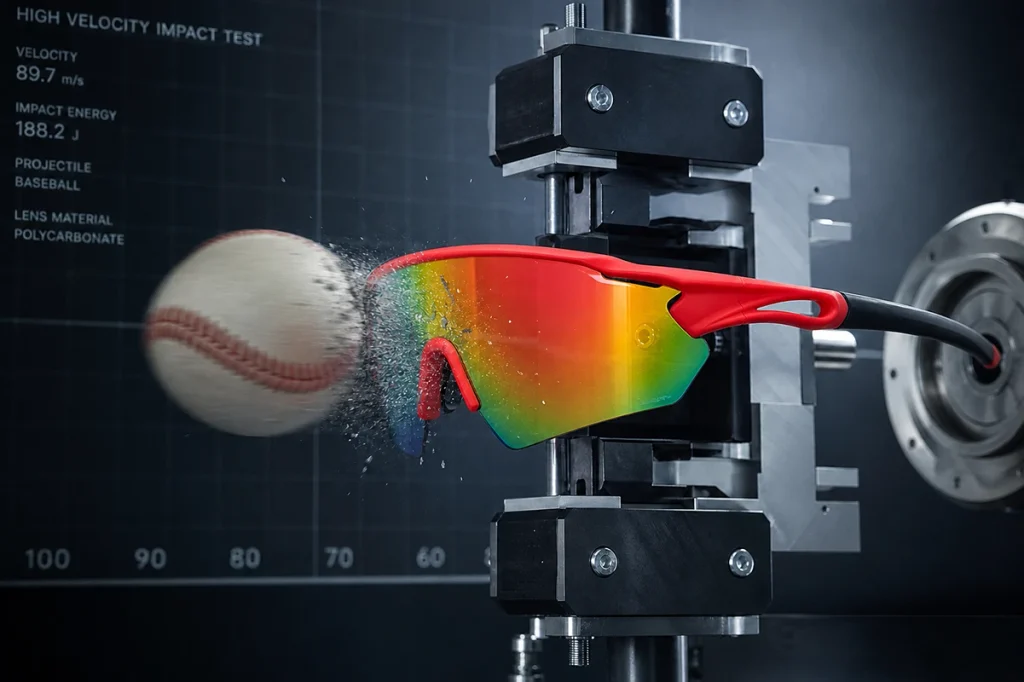
3. Impact Safety Compliance: Lenses must pass ANSI Z87.1 high-mass impact (500g pointed projectile dropped from 127cm) and high-velocity ballistics testing without dislodging from the frame.
4. Regulatory Registrations: Verify valid factory certifications, including Intertek testing records and official FDA Facility Registration (FEI #3012788416) for seamless North American customs clearance.
5. Nosepad & Temple Adjustability: Check for co-molded or metal-core adjustable hydrophilic TPE/Megol nosepieces that grip securely when wet with sweat.
6. Complete Packaging Ecosystem: Audit the manufacturer’s capability to deliver custom EVA hard cases featuring custom molded foam slots for 2 spare lenses, microfiber cleaning pouches, and optical prescription inserts.
六. Frequently Asked Questions (B2B Sourcing FAQ)
SOURCING COLLABORATION NOTE: JuLong Eyewear offers comprehensive B2B OEM/ODM solutions for an exclusive interchangeable-lens cycling sunglasses line, including rapid 3D prototyping, precision CNC tooling, and certified lab testing.
Q1: Can interchangeable cycling sunglasses accommodate prescription (RX) optical inserts?
हाँ. Leading designs incorporate a discreet snap-in RX optical clip directly behind the nose bridge. This allows riders with myopia or astigmatism to clip in corrective lenses while freely changing the outer protective shield.
Q2: How does temperature affect lens swap retention force?
At sub-zero temperatures (0°C to -10°C), cheap polyamides stiffen and become brittle, making lens changes difficult and prone to cracking. High-grade virgin TR90 retains flexural elasticity down to -30°C, ensuring consistent 18–22 N retention force in all climates.
Q3: What is the typical Minimum Order Quantity (MOQ) for custom interchangeable cycling sunglasses?
At JuLong Eyewear, our standard MOQ is typically 300 को 600 units per model, allowing 2 को 3 custom frame colorways and a bundled 3-lens set with custom brand logos and customized EVA protective packaging.
Ready to launch or upgrade your brand’s performance eyewear collection? Explore JuLong Eyewear OEM/ODM Custom Manufacturing Services or contact our engineering specialists today for free sample evaluations and technical consultations.