A Technical Safety Guide on Ballistic Protection, Polycarbonate Optics & Compliance for Eyewear Brands
1. The Safety Baseline: Why High-Velocity Impact Standards Matter in Baseball
In baseball and softball, high-velocity impacts from 90–105 mph balls, foul-tip deflections, and collisions present severe eye injury risks. Standard consumer sunglasses using Acrylic (PMMA), thin TAC, or mineral glass shatter upon high-speed impact.
Professional baseball sunglasses must utilize optical-grade Polycarbonate (PC) or ballistic Nylon (PA) shield lenses certified to ANSI Z87.1-2025 high-velocity impact standards to guarantee absolute shatter resistance.
Core Testing Requirement: Under ANSI Z87.1 high-velocity protocols, the lens must withstand a 0.25-inch steel ball traveling at 150 ft/s (102 Meilen pro Stunde / 164 km/h) without fracturing, fragmenting, or dislodging from the frame.
Material Superiority: Optical polycarbonate provides up to 10× the impact resistance of standard resins, while Swiss Grilamid TR90 frames absorb kinetic shock across extreme temperatures (-20°C to +60°C).
2. Impact Physics: Baseball Kinetic Energy vs. Lens Substrates
A regulation 5-ounce baseball traveling at 95 mph carries approximately 120 Joules of kinetic energy. When a ball strikes an athlete’s face, the impact duration is under 1.5 milliseconds. The eyewear substrate must dissipate this energy elastically rather than failing brittlely.
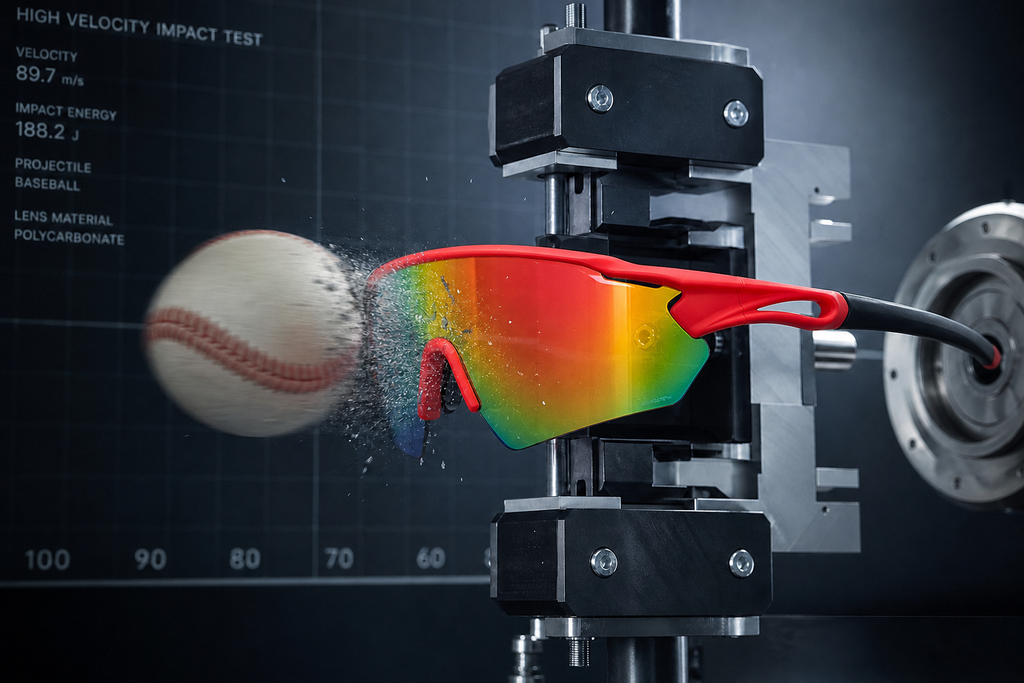
Brittle Failure (Acrylic & Thin TAC): Low impact toughness causes sudden shattering into sharp shards, acting as secondary ocular projectiles that cause permanent corneal lacerations.
Ductile Elastic Deformation (Polycarbonate PC): Amorphous thermoplastic molecular chains flex to absorb and dissipate kinetic shock waves without fracturing or generating sharp edges.
3. Safety Standard Comparison Matrix
B2B sourcing directors must distinguish between general optical norms and certified ballistic safety standards:
| Testing Standard | Impact Protocol | Target Application | Baseball Compliance Status |
| ANSI Z87.1-2025 (High-Velocity) | 0.25-inch steel ball @ 150 ft/s (102 Meilen pro Stunde); 500g pointed drop test | Ballistisch & High-Impact Sports Eyewear | Mandatory Benchmark for Competitive Baseball |
| ANSI Z80.3-2018 (General Optical) | Drop-ball test: 5/8-inch steel ball from 50 inches height | General Fashion & Casual Sunglasses | Insufficient alone for baseball impact protection |
| ISO 12312-1 (Global Sunglass Norm) | Level 1/2 optical and general robustness filters | Everyday Consumer Sun Protection | Baseline UV standard; requires supplementary Z87.1 |
| EN 166 (European Safety Standard) | Grade F (45 m/s) / Grade B (120 m/s) particle impact test | Industriell & Sports Personal Protective Gear | Fully Compliant for European CE export |
4. Polycarbonate Material Science: Optical Clarity & Surface Hardness
Optical Abbe Value (30): Provides high optical clarity combined with unmatched fracture toughness compared to CR-39 and mineral glass.
Anti-Scratch Dip Hard-Coating (1.5H–2H): Thermal dip-cured siloxane resin protects lenses from diamond dust and clay abrasion.
100% UV400 Molecular Block: UV absorbers blended into the raw resin matrix provide permanent 100% UVA/UVB blockage.
5. Structural Retention Engineering: TR90 Bevels & Anti-Dislodgement
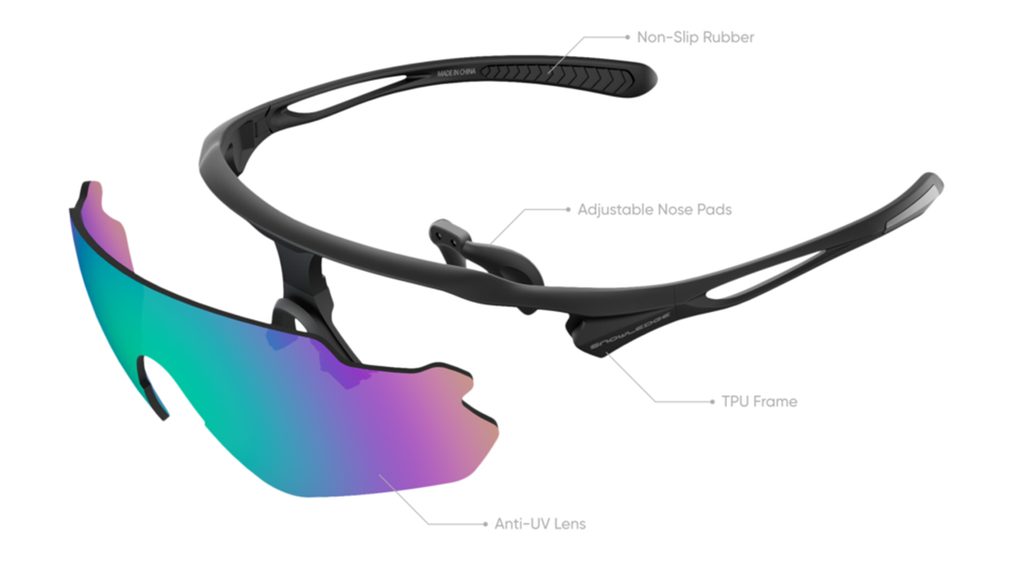
A shatterproof lens must remain securely anchored in the frame upon impact. JuLong’s frame architecture integrates high-security retention engineering:
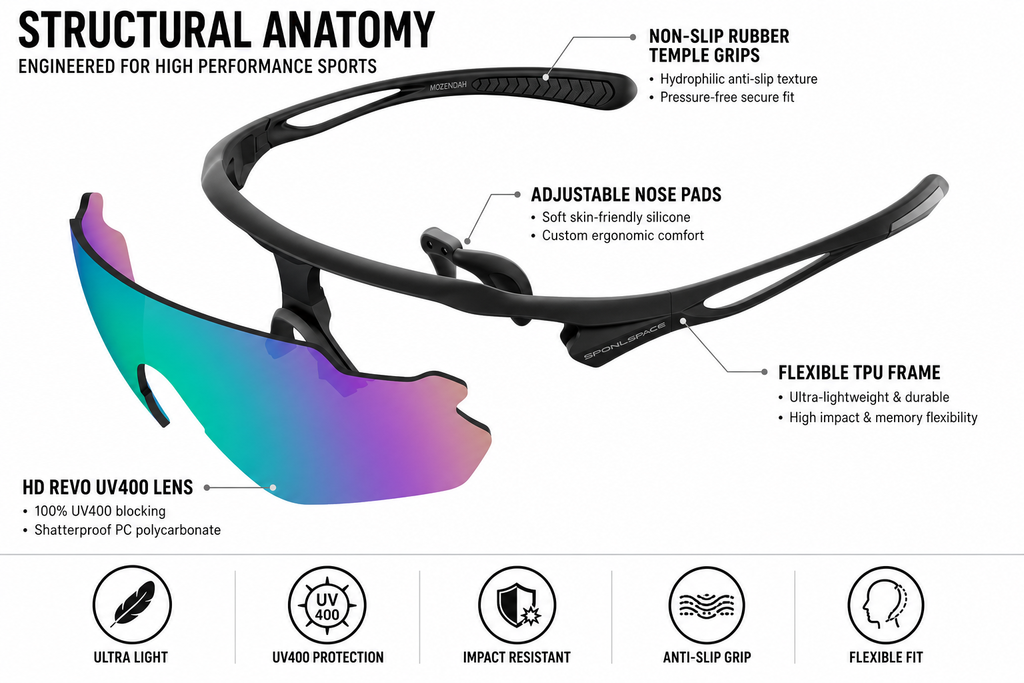
Figure 2: 3D exploded engineering diagram illustrating Swiss TR90 frame, 1.2mm deep lens retention bevels, hydrophilic rubber nose pads, Und 304 stainless steel hardware.
1.2mm Interlocking Retention Grooves: Precision CNC-tooled mold cores (±0.02mm tolerance) prevent inward lens deflection into the eye socket during frontal collisions.
Swiss Grilamid TR90 Shock Absorption: Frame flexes outward elastically to dissipate impact energy, returning instantly to original shape.
304 Stainless Steel Hinge Anchors: Reinforced copper barrels and 304 stainless steel hinge pins prevent temple shearing during lateral impact.
6. JuLong Factory Optical QC Testing Workflow
Schritt 1 — Raw Material Spectrometry: 100% virgin TR90 resin and optical-grade PC pellets verified before molding.
Schritt 2 — High-Velocity Projectile Testing: Statistical batch testing with high-velocity steel projectiles calibrated to ANSI Z87.1 specs.
Schritt 3 — Laser Optical Power & Distortion Checks: Ensures zero diopter shift or prismatic distortion across 7-base curved shields.
Schritt 4 — 48-Hour Salt Spray Testing: Validates anti-corrosion resilience against player sweat and sunscreen.
7. Frequently Asked Questions (FAQ)
Q1: Are all sports sunglasses ANSI Z87.1 certified by default?
A: NEIN. Standard cycling and casual sports glasses typically only meet ANSI Z80.3. Brands sourcing baseball eyewear must explicitly specify ANSI Z87.1 ballistic PC lenses.
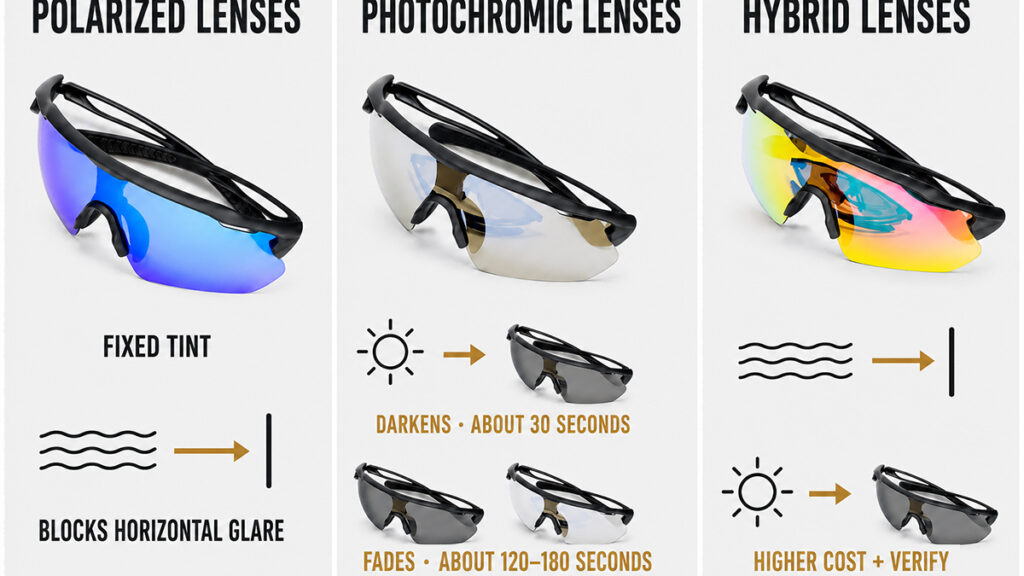
Q2: Can polarized lenses meet ANSI Z87.1 standards?
A: Ja, provided they are injected PC-POL (polycarbonate polarized) Linsen. Standard thin TAC polarized lenses do not meet high-velocity impact requirements.
Q3: Does JuLong provide certified testing reports for export compliance?
A: Ja. We provide full laboratory compliance documentation for US FDA registration, ANSI Z87.1-2025, ANSI Z80.3-2018, and European CE EN ISO 12312-1.
8. Partner with JuLong Eyewear
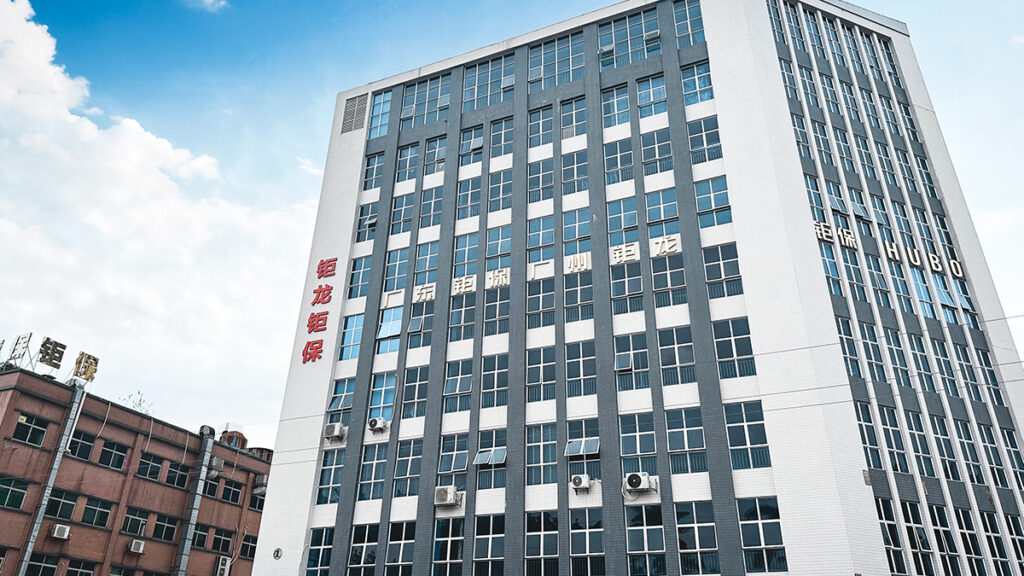
JuLong Eyewear (Guangdong Hubo Sports Products Co., Ltd.) brings 16 years of sports eyewear manufacturing experience (established 2011), 120+ active patents, und a 15,000 m² cleanroom factory to support your brand’s growth.
Request Certified Baseball Eyewear Samples & Testing Reports:
• Step 1: Send your 2D sketches or 3D CAD files for a structural impact and mold analysis within 24 Std..
• Step 2: Receive SLA prototypes and certified ballistic PC test samples in 7 business days.
Direct Contact: info@julongeyewear.com | www.julongeyewear.com